


Quick & Dirty - IN THE FEELS - the secret to successful marketing
Anna Bellissima
People don’t buy the details, they buy the feeling of what they’re becoming.
That’s the part most marketing misses.
If your copy only explains, it leaves out the mechanism that actually moves people: emotional recognition.
In this video, I’m breaking down how to use narrative magic and sharper messaging to create real resonance — not vague inspiration.
Ready to learn and grow?
Join Quick & Dirty Marketing for £11/month: 🔥🔥🔥
Prefer to read the transcript? Scroll down… ⬇️
What next? Book your call, and let’s see how my support could help speed your success.
- Transcript -
Every successful consumer goods brand is selling based on who their audience wants to be, on who their customers want to be, what they want to feel.
Maybe they want to feel professional, or competent, or elevated, or rich, or attractive, or satiated. There’s so many different options.
Because once we know how they need to feel in order for this to be like an easy decision – and how they want to feel – then we can reverse engineer the kinds of things that we need to say to stimulate that cluster of emotions – whatever you have decided on – and whatever’s come out of your market research as well.
We’re going to be talking about this. You can reverse engineer it and figure out how to create that emotion.
Now, all of this is very achievable. We can all immediately name pieces of writing. These are usually books that have changed us, that have changed our emotional state, things we’ve read, essays, blogs, books we will never forget. And it’s super acceptable to talk about in that context of kind of literature and journalism and essay writing.
But can we also acknowledge that businesses and brands have done this to us too? Can we also acknowledge that like the creative expression of professional marketers has done so, so much to impact us personally and as and culturally societally as well. And as I said this is so easy to do human beings are so we’re suggestible our tender little hearts are wide open, and in general we want to believe what people tell us. Most people are inclined to believe us and most people can also very easily be cued to experience certain emotions just by having them suggested or described.
Okay, so using language in this way, so well researched, there is a huge amount of education in this world about persuasive writing. In fact, I am opening doors to a course on this very topic and this very week.
But, you know, my daughter, my daughter’s 14, and she is practicing, they’re doing a persuasive writing module at school, how to pitch. They’re doing this really cool exercise. And, you know, I recommend you give it a try, even if it’s just as a thought exercise.
They’ve each been given a piece of art that they don’t particularly like. I think they had a selection of art postcards. They had to pick one that they didn’t particularly like and then they have to write three paragraphs or something selling it you know dragon’s den style pitching it figuring out how to turn the things that you don’t like about the piece of art into something that somebody else can feel excited about or moved by or interested in or entertained by.
The motive of persuasive writing is to figure out how to make the person you’re talking to feel a certain way about the thing you are talking about.
Okay, this is taught in schools, and we can all remind ourselves about it. There’s so much information. And you know, a lot of this is actually just about mindfully and intentionally expanding your vocabulary, right? So looking at what you’re writing and adding a layer of nuance and sophistication so that it does become more specific.
You know, like how wine experts have 12 different words for dry wine. So they call it flinty or smoky or burnt toast because they have, through training and years of practice, acquired a very sophisticated palette. And, you know, writing in this way is very similar in some ways. So the more precisely you can name an emotion or experience, the more precisely you can evoke it in your audience.
So if you are only describing your work as helpful or transformational, you are working with very blunt tools. But if you can identify a specific feeling that your ideal client is desperate to experience, is it vindication? Is it relief? Is it permission, clarity, hope? Now you can speak directly to that hunger.
And this is why tarot and astrology are such incredible resources for marketers because they give you this whole vocabulary of kind of emotional states and archetypal energies that a lot of people aren’t always conscious of, like maybe they couldn’t actually name or describe the state themselves, but they do recognize that state when they’re introduced to it; and that recognition – that oh wow – that’s what’s been going on for me – it literally changes their consciousness: they’ve become aware of a layer that they hadn’t been aware of before.
So if you can provoke a strong emotion, you can be remembered. People don’t remember what you say. They don’t remember details, but people do remember feelings.
That is what changes our brain chemistry. It changes our neural pathways. So the more frequently we can do it, the more memorable we’re going to be.
And that’s the name of the game, right? Brand awareness. People seeing your marketing content and not being starting from square one every single time they see it because they remember that you made them feel something. If we can do that, then your marketing kind of almost circumvents logic.
We still need logic. We know people, we know the details are important, right? The deliverables are important. But we know that people don’t use logic at the front end of the decision. So yes, it’s still important, but we’re not setting it aside entirely. We’re just recognizing that what is most important in the decision making process is not the rational brain. It’s the deeper layers of the psyche.
And it’s through this capacity to change people’s states that your brand just becomes a part of people’s awareness, a part of people’s consciousness. Your takeaway is this: we are deliberately and shamelessly provoking specific emotions.
There are a lot of people in your industry who are writing clear, concise copy that does not make people feel anything. It only gives details. And that type of copy is only attractive to people who have already decided. They’ve already decided from their heart, from their emotions. Maybe they have a personal connection with you. Maybe you shared something that they just really vibed with. They have already decided that they want to work with you.
And if they haven’t reached that place yet, the details are irrelevant.
So this, creating emotion, changing people’s states is how you create followers, how you create fans. People want to support you. People want to encourage your business. They want to work with you. But they can only do so if they remember you. and they can only remember you if you make them feel something.
Family and friends, people you know in person, it’s much easier for them to support you because you mean something to them, you make them feel something. But if you want to experience the encouragement and support of others, we have to make them feel something.
Quick & Dirty - FAIL DATA - How to Learn When Business Plans Don't Work
Anna Bellissima
Your launch bombed. Now what? Don’t be one of those entrepreneurs who spirals into inaction after a disappointing campaign.
In this video, I teach the FAIL DATA framework – 7 questions that extract intelligence from any failure so you can build a comeback plan instead of giving up.
TIMESTAMPS:
0:00 – Why a promotion bombing isn’t the real problem
2:02 – How to process disappointment (without bypassing it)
3:47 – The 7 FAIL DATA questions that show you what to fix
7:40 – Building your comeback plan
9:00 – Your next move
Ready to learn and grow?
Join Quick & Dirty Marketing for £11/month: 🔥🔥🔥
https://annabellissima.com/qdm
Prefer to read the transcript? Scroll down… ⬇️
What next? Book your call, and let’s see how my support could help speed your success.
- Transcript -
Your launch bombed, nobody bought, and now you are frozen. Maybe you’re telling yourself that you just can’t handle another disappointment, that you will have to give up if you fail again. Disappointment is as much a part of business as success is. And so I’m going to teach you a way to alchemize your disappointment into absolute nuggets of gold so that you no longer have to try to avoid it.
My name is Anna Bellissima. I am a chaos witch and teacher of quick and dirty marketing to spiritual startups. And today, I’m showing you how to extract intelligence from your failures so that you can get back into the arena without spiralling into months of inaction, because that disappointing launch is packed with treasure.
So first, we have to normalize. Failure is a business reality. Every successful business has bombed launches, angry customers, flopped marketing campaigns, but we don’t pay attention to that. We pay attention to the highlights and compare them to our low light. So when your launch doesn’t work, it feels uniquely devastating, especially if you are a coach, a healer, a creative entrepreneur, if you’re sensitive, empathic, if you feel particularly vulnerable to rejection. And then, so when you experience disappointment, that creates resistance, resistance leads to in action disguised as perfectionism, or I just need one more course, which leads to more disappointment, and we spiral down.
The biggest blocks in business are never tactical. If you need help setting up a sign up form, you well know that you can hire somebody for 50, 75, no more than £100 to help you with that. But when you are carrying with you the weight of previous disappointment, when you are terrified of failing again, when you are not resilient, no amount of strategy will help you move forward, so we need to process this. Not bypass it with affirmations, but actually process it.
Don’t try to power through the fear. Instead we do this. Feel it fully. If you feel afraid, sad, disappointed, rejected, let it out, cry, scream into a pillow, stamp your feet on the floor, throw a tantrum, let it fully exist in your body. When some of that energy is spent, talk to the part of you, that is protecting you from disappointment, the voice saying, “You can’t fail again,” it’s not here to sabotage you, it’s trying to protect your tender, tender heart. This is an act of love.
So instead of fighting it, use meditation, or journaling, or oracle cards, or automatic writing, to ask, what are you protecting me from? And then, you can tell it, explicitly, I am willing to be disappointed again. I am prepared to be disappointed again. I want to be disappointed again, because more failures are inevitable part of growing this business.
And then the third thing is to work with both of those fears, because if you are afraid of being disappointed, I dare say you are also terrified of being a disappointment of being disappointing to your clients, of having an angry customer, or letting somebody down. So visualize that as well, and feel it, and stay with the discomfort, just allow that discomfort to be in you, until it moves, and changes. And this is how we begin to separate ourselves, our worth, identity, from marketing results. And when we can do that, we can look at what happened a little bit more objectively.
Which brings us neatly to the FAIL DATA Framework. The fail data framework are 7 questions. You’ll find a worksheet somewhere around this video that extract intelligence from any disappointing campaign. Here are the questions:
Question one, did you complete it? Did you do earnestly and sincerely your best? Did you see out the full marketing campaign, or did you pull the plug after three days because you didn’t see immediate sales? Seeing the campaign through to completion, teaches you things that you can only learn by finishing the assignment, whether or not you end up making sales, and accepting the truism that we all know that many sales are made in the th hour before a promotional period ends.
Question two. Was it dead simple to buy? Confusion is the number one reason why people don’t complete a purchase, If they are not sure of what they’re getting, or whether it’s for them, whether it’s right for them, when the program starts, what’s included, whether they’re a payment plans. And every time you promote an offer, your copy and your process will get clearer. That is cumulative progress.
The third question, did your audience grow between the last time you promoted this offer and this time? This is enormously important. If your offer sold well, the first time you promoted it, but bombed the second time, is because your hottest leads already purchased, and you are beginning to saturate your existing audience. We need to have new people coming into your audience and disinterested people, leaving your audience, so that there is a constantly refreshed pool of hottest leads, because in an audience that isn’t changing, at some point, everybody who is going to buy has bought. Your audience needs to be a river, with constant flow. People leaving and joining, not a stagnant puddle. If it doesn’t grow between launches, you have nobody new to sell to, and so you’re trapped in the cycle of constantly creating new offers, trying to appeal to the same small group of people in your audience.
Question four, did what you are selling solve one specific problem for one specific person? Vague offers don’t sell. You need to get incredibly concrete with the outcomes that are on offer.
Question five, do you have proof? Do you have testimonials? Do you have case studies and results that say you do what you say you can do? If not, that is your primary objective until you have them.
Question six, what is the market doing? Talk to your peers. Often you will find out that everybody is struggling with similar challenges, and it’s not uniquely you. Of course, that isn’t a solution, it doesn’t fix anything, but it can help you to stop making it mean something about your business specifically, or you personally.
And question seven, what are the soft wins? What are the less tangible outcomes of the promotion period that you have just completed? So, before revenue appears, these indicators often show up, more conversations happening, finding that people understand your offer more clearly. They understand the outcomes more easily, your audience is growing. Your engagement is increasing. These are bread crumbs, pointing to future sales. These are the clues that show up before the money does.
Which leads me to this critical reminder. Marketing today yields your results in six to twelve weeks. The day you sow the seed is not the day you pick the fruit. So don’t call your promotional period a failure too soon, because chances are the true results you will see in several months from now.
So now that you’ve answered these seven questions, you know what to fix. You can build your comeback plan. You can repackage your offer based on the confusion, you identified in people who didn’t purchase. You can refresh your positioning, to speak more directly to people you’re trying to reach. When you change your messages, different people in your existing audience will step forward, and that will refresh your lead pool in itself. The ones interested in your old positioning drop back, and your audience evolves with you, as new people step forward.
The other thing I want you to do is be sure to identify the support you need, even if you can’t invest in it yet. Who do you need on your team? What automations would help you do this more efficiently. What training or mentorship do you need? Research it. Find out the costs. Put a date in the calendar for when you will explore this. Money loves a job, and having a clear plan for how support will help you grow, is very magnetic.
And here’s the paradox. Building this resilience creates more opportunities for both disappointment and success. As you know, the pendulum cannot complete only half of an arc. So think about it this way – the rejection challenge. If I challenged you to go and get 20 rejections for your offer, genuine rejections, where people say, “No, this isn’t for me.” Don’t you think you’d probably make one or two sales along the way as well? You can’t collect 20 no’s without getting a couple of yeses. And how resilient would you feel knowing that you can handle those rejections in a row and keep going? I promise you, anybody who has worked in sales gets very quickly inoculated to rejection. That’s the point.
Acceptance and rejection are completely entangled. You can’t have one without the other. You don’t get to choose only success, only happy customers, only winning campaigns. Failure is part of the territory, and your willingness to experience disappointment, and, yes, to be disappointing is what allows you to build the business that you want.
So, here is your assignment. Take your most recent disappointing launch and run it through the FAIL DATA questions.
As I say, you will find a worksheet around this video – or message me for it if you can’t find the link – extract the intelligence, build your comeback plan, and remember, the core belief that anchors everything is that there is so much demand for your work. When you believe that, to your core and a campaign goes wrong, we problem solve. If you don’t believe there’s demand for your work, chances are you’ll probably feel tempted to quit.
If you want practical marketing training, plus live support to navigate, all of this, offer design, messaging, sales copy, getting back in the game, I want you to join quick and dirty marketing, it’s £11 a month. The link’s in the description, there is no minimum commitment, cancel any time. Now go and collect some fail data.

Market Research: the Magic Ingredient You’re Probably Ignoring
Market Research: the Magic Ingredient You’re Probably Ignoring
Let’s talk about market research – as unglamorous as wearing yesterday’s pyjamas to the grocer’s. Why must we do it? Because deeply understanding your audience is the difference between messaging that converts and messaging that elicits a deafening silence.
If you’re winging it without research, you’re probably spending a lot of time and energy – maybe cash as well – into the marketing abyss. However, there is a way forward, a solution to offers, messaging, ad campaigns and more created with the confidence that your audience will buy what you sell.
In other words, market research gives you the language that will turn strangers into clients.
Market research – a.k.a deep listening – is how you write content that has people say “I feel like you’re inside my head, this is exactly what I need.”
Watch the video version >> HERE <<
Why Market Research Matters (and you skip it at your peril)
In business your ultimate metric for success is profit to the bottom line, but they don’t tell you WHY people buy. Market research uncovers the nuances, fills in the blanks – when YOU understand your potential buyers desires, priorities and frustrations, you can find more people like them who are in your audience today.
Not the dream audience you’re building or wish you had, but the people whose attention you already have.
It does come with a catch; professional researchers know that what people say they will do is often different to what they actually do. So we do have to take all findings with at least a grain of salt. Nevertheless, you will discover the most powerful language and insights through the process and gives you the best chance of predicting behaviour in unpredictable systems.
How to Ask the Audience Oracle (Without Losing Your Sanity)
1. Competitor Analysis
Start with the obvious: check out the competition. (“Comparison is the thief of joy”, so tread carefully).
Look at what they’re selling, the promises they make, and the language they use. If you find several purveyors selling the same specific service, you can safely bet there is demand for it – your task is to identify how you can attain the same outcome for people in a different way – and do it better.
Hot tip: Record voice notes to simulate an ideal client’s frustration, like, “I can’t handle these hot flashes anymore!” Then wait. Ads targeting that particular challenge will soon pop up, giving you insights into what your competitors are selling.
2. Social Media Listening
Scroll as a creator, not a consumer. What ads pop up? What topics are being discussed in groups you belong to? What questions do you see people asking? Respond where appropriate, and make notes of the language people use when describing a situation you can help with.
3. The Win-Win Call
Here’s a simple, genius tactic: invite an engaged follower for a 20-minute “win-win” call. Tell them you have nothing to sell but would love to hear about their challenges and desires. Sweeten the deal with a gift card, and really listen. Their insights can guide your messaging, offers, and promotions.
Be sure to capture any specific language or turns of phrase, so you can use them in your content. Bonus: sometimes they’ll ask about working with you, too.
4. Insight Through the Veil – Divination, Dreams & Embodiment Work
🦊 Divination: Use tarot, the iChing or other divination system to ask for insight, for example a spread showing their journey to discover you, or specific questions such as What does my audience truly need?
🦊 Dream Scrying: If you’re confused by lots of potential messages and not sure which is the most important, ask for clarity through your dreams. Keep a notebook and record the insights that surface. The subconscious is a powerful tool for uncovering truths you might not consciously see.
🦊 Self-Role Playing: Flex your method-acting muscle and step into your ideal client’s shoes. Role play the person on the other side of the call; what do they say about your offer? What do they need to hear to feel seen? This exercise can help refine your messaging with eerie precision.
5. DM Conversations (multiple choice)
If you’re leading sales conversations in your DMs, sometimes the conversation dries up (or never got started). Sending a message “quick research question if you have time… which aspect of YXZ is the most important to you” and then giving 3 x options with cute emojis will give you some insight if you send it to enough people, and is fun and easy to respond to (winner for new or re-igniting old conversations).
6. DM Conversations (in flow)
Sometimes you will get very, very lucky and receive a ‘brain dump’.
I do NOT recognise using this type of questions as a conversation starter, but if you’re in flow and can drop in an open ended question like;
🦊 “How does this affect your daily life?”
🦊 “What have you tried before?”
🦊 “What’s stopping you from trying XYZ?”
This type of question has the potential to open the flood gates, and their answers can shape your next offer or piece of content.
7. Ask Hot Leads to Design Their Own Solution
Identify a likely suspect in your audience, someone you know a bit about their situation but it hasn’t been the right time for them to sign as a client yet. Ask them, “Would you do me the great favour of answering a handful of research questions for me?”
🦊 “What do you really want?” (as pertains to a problem you can solve.)
🦊 “Why do you think it’s hard to have that?”
🦊 “If you could design the perfect solution, what would it look like?”
One quick exchange can spark a new offer — if one person is dreaming of it, there are others in your audience too. An off-the-cuff exchange like this can lead to an idea that sells immediately.
8. Validate Before You Build
Never, I repeat, never create a program or offer without first validating it. Ask your hottest leads: “I’m thinking of creating XYZ. Does that sound interesting to you?” If you get nothing back, it’s time to tweak the idea. If you get enthusiastic yeses, there’s your green light.
Don’t Skip the Research
Whether you’re combing through competitor ads, hopping on calls, or running polls, market research really is the secret of powerful messaging. Best of all, most of these actions can be carried out in just a few hours, identifying small (or large!) changes that can instantly transform your results.
The insights you gain today will change your business tomorrow. Start exploring, kittens, and remember: the market always leaves clues, as long as you know where to look.
~ • ~
All of this, sweet kitten, is just one possible strategy for connection-based marketing and stand-out messaging that I teach as part of DEMAND.
You should definitely look into it 👇🏻🦊 and I will see you on the other side 💋

Surprise & Delight (or; email list growth, an organic strategy)
Surprise & Delight (or, how I grew my email list organically)
The seed of the idea: a low-cost product
Before I ever offered a group programme, before I opened a Facebook group or ran a live event, I set up a little online store with the idea of recording and selling guided meditations.
I had recently come across someone running this kind of subscription service, and I liked the idea. Her visuals were cute, her writing was *chef’s kiss*, and I wanted to see if I could do something similar. It was a fun and creative side hustle, and seemed like an easy place to jump in.
Once I had written a script and recorded the first file on my phone, I tinkered with some sound editing software, uploaded it to Dropbox.
“Prescription: when feeling rejected, unappreciated, or careworn.
If possible, make yourself cozy in a nest of blankets and pillows, add incense or essential oils: tend to your physical comfort first. If you have one, bring along a piece of rose quartz (or just imagine it).
Emerge softer yet stronger, your naked heart restored.”
I threw together a quick image and description (see archive image 😍👆🏻) and made it available to my shop, for the princely sum of £3
*dramatic pause*
Lead Gen’s secret code: quite literally 👇🏻
Then I used the shop software to create a 100% discount/coupon code and named it FRIENDS or THANKYOU or something equally heart-warming 👼🏻
^^ this was my accidental lead generation tactic. I created the code for the purpose of having a few people friends test the checkout process, but quickly saw and understood the incredible response. Here’s why it was a stroke of genius ☿ ✨
- it came from an authentic and genuine delight and gratitude for everyone who was paying attention to my social media profiles.
- my motivation was thank them for their encouragement, support and feedback.
So, what did I do next? I’m so glad you asked:
- I shared my image and description – separately and together – and a few other posts announcing the existence of this thing I had made, that the making of it was a lovely experience, and that I had a discount code for anyone who would like to listen.
- A small number of people commented to say ‘yes, please!’, and, being the polite little cherub that I am, I asked their consent to send a message/DM.
- In the DMs I sent a link to the product page AND the discount code without specifying how much – a beautiful conversation opener with people who were interested in my work.
- I also sent a message to just about everyone on my friends list, with words to the effect that “I made this, I love it, I want you to love it too, here’s the purchase link and you can use the code THANKYOU for a big discount”
You can probably imagine what happened next?
❤️ My friend would get a warm fuzzy feeling and click the link, see a reflection of the thing they asked for (same copy, or same image, or both) at an extremely affordable price
❤️ Whereupon they would likely add the product to their cart, and apply the coupon code out of curiosity
❤️ And be surprised and delighted to receive 100% off their purchase – emotion at the point of sale which HUGELY boosts the likelihood of them completing the check out.
Connection-Based Marketing
Now, they have a transactional relationship with my brand (they had to click a link, apply a code, complete a checkout process) and in return they got a beautiful meditation but more importantly, they experienced surprise and delight, reinforcing a positive pre-disposed towards my business. They’re actually looking forward to hearing from me again.
Hail Hermes indeed, past Anna, for that truly divine inspiration ☿☿☿
I had a method for reliably growing my list without ads, so when I was ready to launch higher ticket offer (which I did just a few months later, at approximately £120 as I recall), I had a small but growing audience of appreciative friends who were eager to see what I was up to,
Mind you, at the time the process was clunky – I was manually copy-pasting email addresses from £0 transaction shop receipts into my email list and triggering delivery of the audio file. But this was four years ago and could be executed much more cleanly and efficiently these days.
But it’s worth noting, that it was the very messiness itself, that prompted me to quickly discover the power of automation in my business; even as a very beginner baby business, was very quickly apparent that rapid growth can consume a great of time. I was motivated to find a better way – which became a guiding principle that has grown my business ever since.
Should everyone try The Surprise & Delight Strategy?
If it’s easy for you to set up the back end, why not? And, whether you do or don’t try out this specific transaction, spend some time contemplating how you can introduce elements of surprise and delight to your marketing, and to your message as well. I’d love to hear your reflections on this, please join me on Facebook if you use it.
All of this, sweet kitten, is just one possible strategy for connection-based marketing that I teach as part of The Demand Shift.
You should definitely look into it 👇🏻🦊 and I will see you on the other side 💋
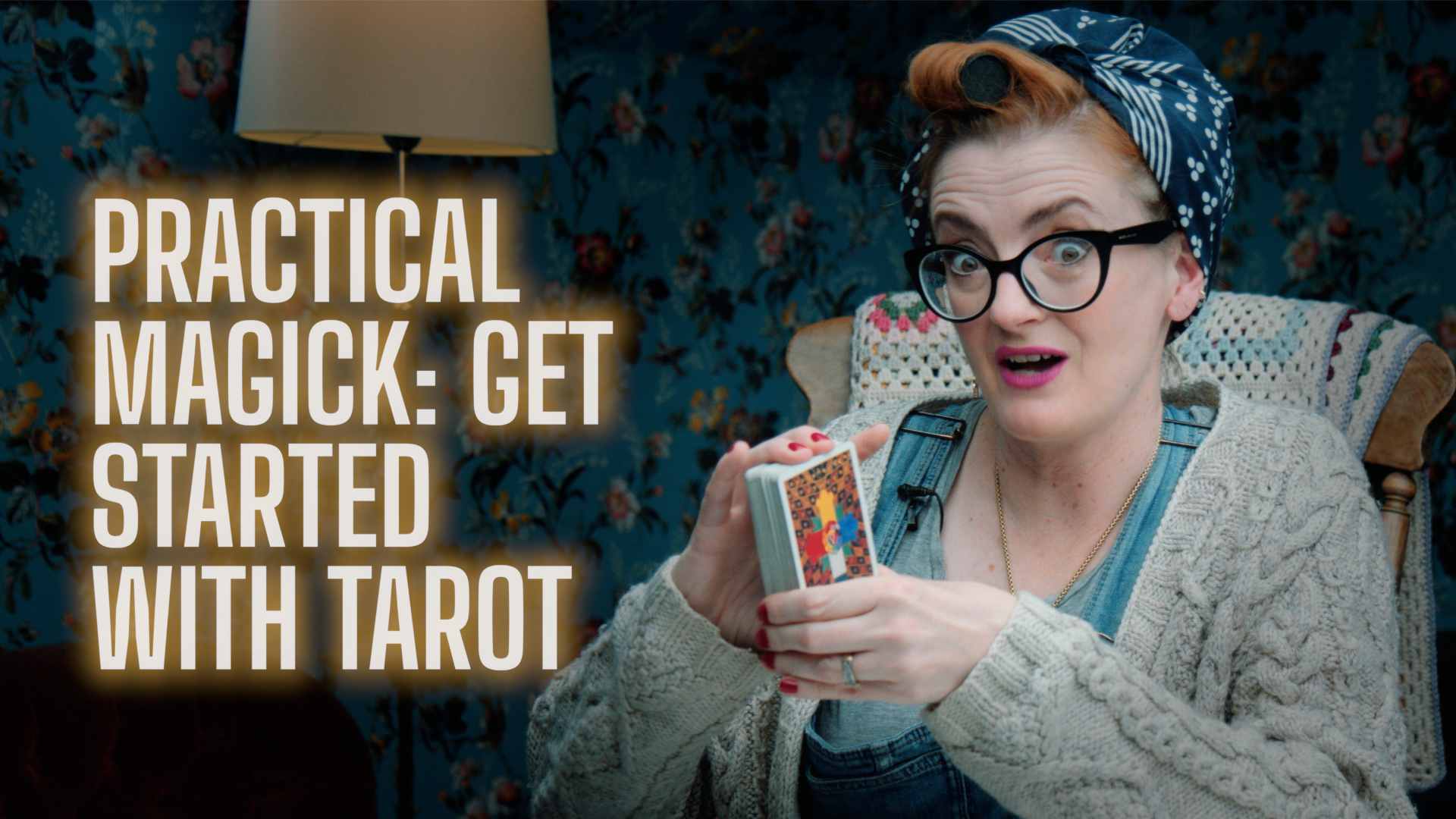
Practical Magick - Get Started With Tarot
Anna Bellissima
🔮 Ready to explore the depths of your consciousness and connect with the great mystery? In today’s class, I’m introducing you to the basics of Tarot and its profound connection to the map of human consciousness.
In this brief yet powerful lesson, I’ll walk you through the essentials of starting your Tarot journey. If you have any questions, drop them in the comments, and I’ll be happy to guide you further!
Discover:
🌳 The deep link between Tarot and the Tree of Life, a map of human consciousness.
📕 How to choose the perfect Tarot deck and book to begin your practice.
🔮 A simple daily Tarot ritual to help you connect with your unconscious and navigate your spiritual path.
Prefer to read the transcript? Scroll down… ⬇️
What next? Book your call, and let’s see how my support could help speed your success.
- Transcript -
If you are an adventurer in magic, sorcery, and the psyche, you will want in your toolkit a means of daily communication with the great mystery. Stay tuned. Hello, I’m Anna Ballisma. I am an extremely powerful magician, as of course, are you, and I’m going to be giving you the briefest possible why, what, when, and how of getting started with Tarot and the map of the human consciousness. In a moment, I’ll give you my recommendations for one deck and one book, but first a little bit of why.
Even though they were, as far as we know, developed in completely different places and thousands of years apart, Tarot is the picture book version of a map of human consciousness called the Tree of Life. The map shows us all of the various states of consciousness and all of the paths between them, from the divine light of creation, or God at the top, all the way down to this 3D world of tax returns and buttons. And of course, the exciting thing about a map is the implication that you can use it for a quest. You can find, you can orient yourself on it, and you can use it to navigate. All those spheres of consciousness and all of those paths on the Tree of Life correspond to individual cards and suits and numbers in the Tarot deck.
So, working with Tarot gives you two really important gifts. It starts to build an understanding of human consciousness and that there might be a map, and it is an extremely effective means of communicating with your unconscious, with the unseen, with the great mystery of it all on a regular basis whenever you want to. Now, there are many beautiful decks available, and I would strongly recommend that your first deck be a version of the Rider-Waite. So, 78 cards split into the traditional Major and Minor Arcana. And my specific recommendation is for the Foth deck by troublesome Uncle Alice de Crowley with art by Lady Frieda Harris.
Now, it’s really important for you to know that you don’t have to learn the Tarot. You don’t have to memorize or understand every single card. Get a deck, get a book, draw a card every day, and I’ll tell you exactly how to do that in a moment. And the book I recommend using alongside this deck is this one, *Tarot, Mirror of the Soul*. I suggest you incorporate this into your morning routine immediately after noting down your dreams in as much detail as you possibly can.
So how specifically and exactly how to do your Tarot draw in the morning. I always knock my deck three times and then you just want to do a good shuffle, adopting a calm, still mind, focusing on breathing, and then asking the question, “What would you have me know?” When you feel like you are good and shuffled, you can either cut the deck, or you can simply take the card off the top. My favorite daily draw also involves the bottom card on the deck. I refer to this as my “as above, so below” draw. So we have the card from the top, what is seen, what is happening in my life, and then the card below, cruelty, what is unseen.
Then, note your cards in your journal beneath where you’ve written your dreams, and look them up in your guidebook. When you look them up, just make a note in your journal of any particular phrases or questions or words that catch your eye as you read. During the day, consider the questions or the phrases that the cards pose to you. And in the evening or tomorrow morning, reflect on what they meant, or the meaning that you took from them, or the meaning that you found in your morning cards.
Create a consistent practice of asking and reflecting on the tarot deck like this just a few moments every day, and you’ll quickly start to understand how the cards communicate with you, how they relate to your life, and how they relate to the big picture, where they place you on the map of consciousness, and how you can move around it. Thank you so much for watching. I hope you have enjoyed this introduction. Please have a look at these recent episodes on creating an altar and working with dreams, and I will see you next time.
Quick & Dirty - The Golden Tap
Anna Bellissima
🚀 The Golden Tap content strategy runs alongside your paid advertising and email funnels, for a consistent flow of inbound leads without endless content creation.
Let’s talk about:
🦊 Demand Positioning, and how high-value content DEMONSTRATES your expertise (so you no longer have to convince, explain or prove)
🦊 Inbound Leads; and how to spot ‘buying behaviour’ from email clicks to social media engagement, and learn how to nurture signals into sales opportunities.
🦊 Content Efficiency: rhythmic marketing that aligns with your life, so you can create impact without exhausting your resources
Thank you for being here!
Prefer to read the transcript? Scroll down… ⬇️
What next? Book your call, and let’s see how my support could help speed your success.
- Transcript -
So what is the Golden Tap system? This is your organic lead nurture strategy. It fits into your overall marketing program running alongside your paid advertising and email funnel, which we are going to be working on soon if you’re working through my program. But first we need to get this organic opportunity underway so that we can actually test how your audience responds to all this messaging work we have been doing.
This is not only, it is not solely a social media strategy, you should also apply it to your email marketing. And I recommend it because it positions you as an expert, not by telling people that you are an expert, but actually by demonstrating your expertise. So you don’t have to do any convincing or proving, you can just show people your expertise. There’s this maximum marketing show, don’t tell. We’re going to just demonstrate how good you are at your work. And by doing this, this is how we create inbound leads.
Now a quick definition, inbound leads, yes, that does mean people jumping into your inbox, but also in this context, it means people raising their hands or showing buying behavior. That also qualifies as an inbound lead, even if you are the one who moves the conversation forward in the DMs, for example. So what do I mean by buying behavior? I mean looking at your email CRM and seeing who is clicking your links, who is opening your emails every single time, who is responding to relevant posts on social media, even if they’re not directly in your DMs, they are indicating buying behavior, which qualifies them as an inbound lead. Inbound leads is not limited to random people popping up in your DMs, even though we love those people dearly.
I also recommend this strategy because it gives a rhythm and rationale to your content creation, so you’re not confused about what needs to be said or in what order or when. And the other wonderful thing about it is it allows you to analyze your marketing and see what does and doesn’t work. And when we see what doesn’t work, it means we can therefore improve it. So in other words, it’s an efficient strategy. It’s an efficient strategy. I have a very rich and full life and I’m sure you do too. And so I wanted to find a way to create the largest number possible of qualified leads from the smallest amount of social media content.
Now of course there is a payoff. Of course I could grow my audience faster if I worked harder at my marketing, but ultimately I don’t want to. I’m very happy with the rate of business growth, especially when I measure it against the small amount of time I spend creating content for social media. So it is efficient and ultimately it is designed so that you will be able to hand off, delegate, automate, systematize 90% of what is involved in the strategy so that for you personally, your time on social media or your time spent on marketing is creating the content you were put here for, fulfilling your life’s work, creating a body of work, developing your expertise and cementing your place in the marketplace, your position in the marketplace, and making sales. And eventually you can delegate that too.
So what does it look like when we get the golden tap flowing? How do we measure success? How do we see, where do we see the magic? Okay, so here’s some indicators. One, you start to see more conversations with hot hot leads happening in your DMs. Some of them, as they say, will be spontaneous. Other ones you will lead, but every week you will see new conversations being added to your CRM. Two, you will start to experience more energy and inspiration around your organic marketing and also more engagement, more reach, more conversations, seeing more buying behaviors. Not all of these are vanity metrics. There are metrics that matter around your social media content, your social media marketing, the most crucial one obviously being the number of conversations you have and the number of sales you make. And also feeling your personal energy and inspiration increase, which always follows another level of clarity about your work and your expertise and your mission.
So how do we do all this? This is all laid out in the workbook, but the foundational piece, the centerpiece of the golden tap, the core of the pipe, if you like, is one chunky, valuable, meaty, potentially life-changing piece of content that you will create regularly and consistently, but at a rhythm that suits you. So I recommend at least once a month, ideally twice a month. And if you can, once a week, once you get into the swing of it, you will be surprised how easily this content comes through you. And the purpose of this is to, as I say, to demonstrate your expertise. You could be offering a change in perspective with a thought piece, or it could be a class on a practical element of something that you teach, or it could be sharing a particular energy tool in a way that is kind of unique to do. So think of this as the work that you have been born to. If you ever imagined yourself writing a book or giving a keynote speech, this is where you begin. This is where you start to build out your body of work as a professional and expert in your field.
So yes, I’m talking about articles, video classes, podcast episodes, however you like to create, canva graphics, PDFs, written lessons, whatever lights you up and is easy for you. Choose that as your next thing to publish. After this thought leadership piece of content is created, the focus of your social media marketing becomes very, very clear. Yes, it becomes to, your objective is to make sure that as many people as you can receive this wisdom and insight from the thought leadership you have created. You want to articulate as clearly and as often as possible how and why people should view it, how and why they should consume it. Ostensibly, to get as many people as possible to watch it, and of course we want them to receive that knowledge, receive that perspective shift and experience a mini transformation just from reading or watching the thing you created. But actually we want to get those people into conversation with you and of course move those conversations towards the sale which is of course the purpose of any marketing strategy.
So what happens next? Go through the teachings on the golden tap strategy. I recommend that you dedicate your next 30 to 45 days or to visibility, to re-establishing your new voice. Follow the golden tap strategy as it is laid out in your workbook as best as you can, understanding that it will feel wobbly at first but it is absolutely worth the growing pains because again this is designed to be endlessly repeatable and eventually so many parts of this process can be automated or delegated so that your only input is sales, conversations and deepening into your own practice and leadership. The lessons on Thinkific will give you an overview and about a week’s worth of content for you to use while you are creating your first chunky thought leadership piece and yes I invite you to dedicate the next four to six weeks to finding out as much as you can about what your audience responds to. Our goal is to help people feel the most important emotional state, the emotional condition for buying which is they want to feel confident that you can help them and I think you can see how over time the cumulative effect of this type of content and this strategy supporting it will really help people to feel more confident that you can help them which ultimately is what is going to encourage them to part with their money.
Before you do this work it’s definitely worth reviewing the previous messaging work you have done on Hot Hot Leads and your Uncommon Method and your competitor analysis. This is all valuable content there’s so much value in there that you can pull out and use for supporting content during this period of visibility. There are lots of examples in the workbook and before I go add to your hyper sigil. This work can and will be delegated, automated, systematized with all the content pulled from your one thought leadership piece which you can ultimately publish monthly or even less frequently than that so your precise marketing actions will be vastly vastly diminished so write about that future reality now in your hyper sigil and who you will be seeking to support you with this and then just to remind you of your next steps after spending this time on your organic process we’re going to do your work on setting up your strong dose funnel which you can send lots of traffic to with ads but we need the wisdom of this experience that we’re gaining over the next few weeks to take your new message to the world.
So remember the goal of this strategy is for anyone in your audience to be able to get to know you and your method very quickly but in a way that does not drain your creativity and energy with a vast amount of content. The golden tap is powered by one central piece of content per month and then the task of social media is very simply to promote your thought leadership. This is how you can make sales even when you’re not actively promoting something. The golden tap is powered by one central piece of content per month and then the rest of your social media is very simple it is to promote your thought leadership to send people to read or watch or view this thing that you created that you’re proud of and to engage them in conversation and qualify them as whether they are potential sales or not.
If you haven’t had your mercury messaging call with me go and complete that preparatory work and book your messaging intensive so that you can start marketing with this exciting new look for your brand. So remember the goal of this strategy is for anyone in your audience to be able to get to know you and your method very quickly but in a way that does not drain your creativity and energy by requiring a huge amount of content. The golden tap is powered by one central piece per month and then the task of your social media is very simple it is to promote your own thought leadership to send people to read or watch or consume this thing you have created that you’re proud of. This is how you create sales this is how you make sales and get inbound leads even when you are not actively promoting a particular offer or service. If you haven’t yet had your mercury messaging call with me go and complete that preparatory work and book your messaging intensive so that you can get started introducing this exciting new look for your brand to the world.
Quick & Dirty - Get Rich from Your Spiritual Business
Anna Bellissima
💼 The eight elements you can create and control, to set up your small business for success. Whether you’re starting from scratch or aiming to break that elusive six-figure mark, this foundation will help you.
Practical strategies and energetic principles that power growth for a spiritual business owner. Questions? Leave a comment and let’s chat 😍
Discover:
– how to craft an irresistible offer that practically sells itself.
– the importance of tracking key metrics to ensure steady growth and business health.
– the secret to creating and managing demand in your audience.
– a consistent and scalable strategy for growing your audience and nurturing leads.
– the power of energetically clean sales processes for a seamless and fulfilling client experience.
– the mastery of your craft as a cornerstone of sustainable business growth and impact.
Thank you for being here!
Prefer to read the transcript? Scroll down… ⬇️
What next? Book your call, and let’s see how my support could help speed your success.
- Transcript -
Only those who risk going too far find out how far it is possible to go. Isn’t that a wonderful quote? TS Eliot. I heard it today.
Now you’re gonna get used to me looking away. I’m recording here but I’m teaching here. I’m on a call here. So we’re gonna talk about the eight critical elements for setting up your baby business, by which I mean anything below 100k, for growth. Now, this is not gonna get you all the way to where you want to go, but it’s gonna create an incredible foundation that will just raise your whole game for the next stage of your business growth.
Now, you can get rich quick. I promise you can get rich quick. There are certain business models that have capacity, that do genuinely have capacity for massive growth year on year. Business systems including content creation. Yes, scalable services, right? The kind of businesses that you are in, there is potential for massive growth, and you know, 200% growth a year is not unrealistic.
So if you have a calculator nearby, just grab your calculator. Put in what has been your gross revenue, your total sales over the last 12 months, and then double it, and then double it again, and double it again, and it’s probably not very long. It’s probably like three to four to six maximum years until you hit a million. Now of course it’s not as simple as just hitting equals equals on a calculator. Of course, we all wish it was, but that like a hundred percent growth minimum year on year is entirely possible if you pick the correct strategy and also have some other attributes like being really agile in terms of who you are becoming at each stage of your business.
That is get rich quick. Are you kidding me? A million in like three to four years? That is get rich quick by anybody’s standards, right? Is it easy? No. Are the results guaranteed? No, they are not. Again, it’s uncomfortable. Alas, no, it is not comfortable either, but it is exhilarating, it’s fun, it’s challenging, it’s fulfilling and rewarding. And when it works, it is one of the only ways that you can legitimately make a great deal of money unless you are, you know, like a talented professional athlete or rock star or movie star, in which case you’re probably not here watching this video.
So let’s get into these eight coins. This is my just slightly esoteric spin on the business and energetic structures that are required to get your business from like 20k a year to the six-figure level and then above and beyond. So let’s get into them. What are they?
Number one, an incredible offer. An offer so good it almost sells itself. Most of you have heard me say before there is no right offer. There’s just the offer that you choose, that you love, that you are so committed to, that you just can’t wait to talk about it all the time. Okay, that’s part one: a really amazing offer.
Part two, Saturn’s game. Knowing which metrics to track and I mean even before that, just tracking your metrics. Okay, this is just like a basic non-negotiable for anybody who is serious about growing their business. You have to be tracking your numbers, my friend. You need to know to the penny how many sales you are making each month, how much profit you are making each month, how many conversations you are having, how many clients you have, even if it feels like a futile exercise because the numbers are so small. It’s only when you start tracking them that you see them starting to expand. There is a whole training on this on my YouTube channel. Saturn rules numbers and numbers love to behave as we expect, and the terrible thing is when you take your eye off them, it’s when you take your eye off them that they can start to misbehave and get up to mischief. So let’s be tracking our numbers. There are lots of other things you can track, you can see them in the video, but let’s start doing that as of today.
The third thing that is really helpful in growing a business is an understanding of the concepts of demand, how to create demand in your audience, how to identify the demand, how to create more of it, how to increase it, how to manage it, and how to manage demands, the demands placed on you as a business owner, and indeed how to make demands as a powerful business owner.
The fourth thing that’s really valuable to have is an energetically clean sales process so that you and your clients feel really aligned in the whole process and the exchange, the financial exchange, just feels like a magical part of the process.
The fifth thing you need is a consistent strategy for growing your audience. We don’t need to go viral, we don’t need to grow by thousands at a time, but that drip drip drip, the cumulative effect of a small number of people joining your audience every day over time, is what is going to allow you to have the greatest impact, right? If you can sell a million of anything to anyone, you’re going to be extremely rich. If you can sell thousands of units at the right price, you are going to be extremely rich. So you can see that it’s imperative that we decide on an ongoing, consistent strategy to just create more people to sell to, more people in our ecosystem, more potential customers. This is not the same thing as growing your social media following. This is growing an email list, and there will be different strategies according to the stage of business you are at.
The sixth thing, this is so important, we want to take advantage of the golden window of opportunity where people are positively predisposed towards your business right at the moment of deciding to join your email list. They are positively predisposed towards you, they have a cognitive bias towards receiving and absorbing and appreciating your wisdom. So we’re going to make the most of that with a simple email sequence. That’s what we’re talking about. It’s a handful of emails to write, it’s the work of a couple of hours to set it up, and it’s going to be the most valuable asset in your business. This is how we take people from stranger to client. This is how we do it without it taking more and more of your energy every day.
The seventh thing that we have to talk about, the seventh coin, is the energetics of success. The energetics of having more, holding more, serving more clients, being on the receiving end of more opinions, more judgments, more praise, more appreciation, more refund requests, more pain in the ass clients, more money, more problems. The scope of what you are dealing with as the leader of your business changes very rapidly when growth is rapid. It’s essential that you have a scaffolding of magical and mundane support around you so that you can create profits, so that you can create assets, content marketing systems that deliver profit into your business month by month, week by week, and are profitable over the long term. In other words, you work hard on a particular asset, a particular structure in your business for a few weeks, and it delivers profit to your business over and over and over again long after you have completed the project.
The final point, number eight, the last piece that needs to be in place is the embodiment of mastery. Mastery of your craft, attaining better and better results for your clients because that in return creates more and more demand for your work and is the driver behind the value of your business. Ultimately, the value of your business will be predicated on the results that you get for your clients and the profit that you make while doing so. So gaining mastery, improving your craft, improving your results, working with better and better clients at a deeper and deeper level to make a more profound impact in your field, is the final piece in the puzzle of growing a business which really is a legacy to your vision and your mission.
There is another essential tool I should mention. It’s not part of the eight coins as such, but it’s kind of like a booster, a magic money-making ingredient that I call the summoning. It is a strategy that we can layer on top of all of these other pieces that we’ve put in place as a way to make sales and demand with no copywriting, no sales page, no email, and no circus tricks. And I love, love, love teaching this methodology, and in fact, I often give it away for free on my own live events. My clients use it, as I say, to create a cash injection while setting up the evergreen system, for example, setting up their email sequence. And they can repeat it in cycles to create a bump in income, and who doesn’t love a bump in income, right?
If you’re missing any of these eight coins, I guarantee that there is more money, more impact, more time, and more freedom available to you. Here they are: an incredible offer so good it sells itself, Saturn’s game and tracking your metrics, a deep understanding of how to create demand in your audience and how to take advantage of it, an energetically clean sales process that you and your clients love, a repeatable system for growing your audience, a simple email sequence to welcome people into your world, an understanding of the energetics of success, an embodiment of the energetics of success, and finally, the last one being mastery, mastery of your craft and of your marketing results, as well as of your business growth.
If you would like to talk about how any of this could apply to your business, have a look around on this page. There will be a link to DM me or to book a call, and I would love to talk about this with you some more.
Quick & Dirty - Positioning
Anna Bellissima
🌟 Imagine what a constant flow of hot leads would do for your business. That’s what Demand Positioning can do for your business.
In this episode of Quick & Dirty Marketing, I share the essentials of a powerful positioning, so that you are never struggling for attention and clients.
Let’s learn:
🦊 how the perceived level of demand for your work in the marketplace will dictate your business structures and strategies – and even your philosophy.
🦊 real-life examples of businesses that thrived or struggled based on their demand positioning.
🦊 practical steps to identify and enhance your unique value proposition, so your brand stands out.
🦊 how to connect with your audience in a way that makes your work irresistible.
🦊 short- and long-term strategies to increase demand.
AND
🦊 actionable steps to continually evolve so that demand only grows.
Thank you for being here!
Prefer to read the transcript? Scroll down… ⬇️
What next? Book your call, and let’s see how my support could help speed your success.
- Transcript -
Why do some brands consistently enjoy more demand than they can meet and others seem to struggle for attention? If there is no demand for your work, you don’t actually have a business. And this is the big purpose of marketing generally, right? It’s not to communicate about the details, the information about your work. The big purpose of marketing is to create demand. And the demand for our work that we create also informs how we structure our offers and our businesses in order to manage and meet that demand.
You have probably heard about a small business that has actually been broken from over demand. For example, you know, like a skincare company that goes viral on TikTok and is suddenly overwhelmed with demand for their products, which they just can’t meet. So that’s at one end of the scale, but what does it feel like when there is no demand for your work or very little demand for your work? So obviously that means sales are slow. You’re having to spend a lot of time persuading and convincing people as to why they should work with you. And at the end of it all, they’re just not saying yes.
I want to use the next 10 minutes or so to give you a brief overview of demand positioning and why it works to create a consistent client flow. And why it is so very important to do this right now, like as soon as you have a business, as soon as you have proof of concept, you’ve served clients, you’ve delivered results so that you can come to actually enjoy and work purposefully without spinning your wheels at your marketing and at closing sales, which is what it’s all about, right? So this is all about positioning, demand positioning.
Before we begin, my name is Anna Ballisma. I am a marketing witch and strategy dominatrix. I am a creator of potential and possibility if you choose to avail yourself of it. And I have helped hundreds of online experts, healers, teachers, coaches, consultants to sign more and higher value clients without having to spend more time on their marketing. We are talking about 400% revenue increase. We are talking about adding 100k to an annual income.
Now, this is a huge topic. The topic of demand, it’s vast. The energetics of demand is almost more important than any other piece. So do have a look in the worksheet that comes with this class. Have a look for the masterclass that I taught on the subject of demand a little while ago. I will link it for you. Honestly, it is the most valuable time you will spend and it makes everything else, every hour that you work, every investment you make, every strategy you adopt, it makes it more effective and more beneficial for your business. So let’s now take a look at demand positioning.
If you did not have a background in marketing, logic would tell you that unless there are people, if you don’t see people clamoring at the door to work with you, then there is low to no demand. Your brain would report that as a logical conclusion based on the reality it sees. And you might also therefore conclude that demand gradually increases in direct correlation to the size of your audience and the success of your marketing. So it would go like this. You get much better audience growth and you get clearer with your messaging and you get better at defining your niche and you get really, really good at all of these things, not like you are now. And then if you’re lucky, you also get more people signing on as clients.
But in fact, as long as you believe there is demand for your work, go and watch that masterclass, you can create demand. How do I know this? Because I know that a business with nothing but an offer or a product or a new idea can go to a marketing agency and tell them, can pay them to create demand. If I had a new health drink and budget, I could go to a marketing agency and say, I want to make a big splash with this new drink. I want people to be excited to taste it for the first time. I want to create a global buzz. And as long as I have the budget, that marketing agency would be able to create demand for my product in the online space.
Now, there are literally hundreds, maybe thousands of books written on exactly this topic. Every book on marketing is essentially dealing with this topic. How do we create demand for our work? And the fact that so much is written about it, I want you to understand that this means there is a system. There are strategies and tactics that anyone can use to generate demand, especially in the digital marketplace where we have access to the eyes and the attention of millions upon millions of people in the global audience. And you and I have the benefit that we don’t even need thousands or probably even hundreds of people to buy. If our offer is priced profitably and designed well, we need tens of people to buy. And that is eminently achievable, right? You can do what a marketing agency can do on a smaller scale. You can, but only if you believe it is possible because you get what you expect, right? We get what we expect.
So the first task is to believe that there is demand for your work. Consult the spirit of your business. Get into a space where instead of feeling anxious about marketing, you feel supported. I want you to understand that you weren’t given this idea. You weren’t gifted with this idea for a business as a cruel prank by the universe. You were given it because there is demand for your work and not just for the work you do generally, but for your particular and unique flavor and methodology of doing it. And once you are in that headspace, you are ready to go to work.
So here are the three concrete steps to position your brand, your methodology, your offer in a way that makes it sought after, effective, popular, the only solution worth listening to. And this way you can create, not create, you can reveal, you can discover, you can see the people who want your work. You can get those people to actually step forward, raise their hands and say, yes, I want to work with you.
Now on the whole, people will believe what you tell them about your business. So here’s a list of what you need to know. Number one, you need to know why your work is so cool and awesome. Okay, you need to know what it is about your work, your specific work, which is so very, very good. This requires some market research. Now this is not about comparison. If you get upset looking at what other people in your industry are doing, it is time to put on your bigger underwear and get down to some strategic problem solving. This is about understanding the landscape that you’re operating in and seeing what other people say about their work. See where there are gaps. You don’t have to be in a category of one. Don’t try to be in a category of one, but you do need to be able to say why your solution is better than this one or that one.
You need to know what sets you apart. What is specifically the thing that makes yours a better solution? What is it about your experience, your expertise, the results you get, the innovation you bring forth, the methodology that’s unique? What little piece is so uniquely you that it makes your solution just such a perfect fit for your audience? Now in business, we call this your value proposition. What is unique about your work and why this uniqueness actually makes your solution, your work better for your audience than other options they may have seen or considered? Why your work is so cool and awesome, also known as your value proposition.
The second thing you need to do, and there’s some overlap here guys, but the second thing you need to do is you need to check in with your audience. You are going to have to get to know your audience really, really well. If you don’t know them, you need to set up some research calls and get to know them because it is vital. I can’t tell you how critical it is to know what motivates your audience and what challenges them. For most of us, this can be kind of a time traveling exercise because for a lot of us, our clients are who we were six months ago, a year ago, two years ago. But if it is in the distant past or if you can’t remember what it was like to be in that position or if indeed your clients are not you of a little while ago, you need to find out what motivates and challenges them. Because once you understand these things, then you are in a position to describe your offer, to present your offer to them as the thing that is filling the gap, the thing that is missing in what they are when they’re looking for a solution, what they’re seeing, your solution can be the thing that fills the gap.
Now, I created an offer a little while ago, six months ago or something, and I went about it like this. You can do the same thing, you can go through the same process. I spoke to somebody who was exactly my ideal client. Obviously, there was already a relationship with them because I nurture my leads. So, there was a relationship there. There was some considerable goodwill between us. And so, I asked her two questions. And if you’ve worked with me, you’ll recognize these questions from the offer audit. The questions were, “What do you wake up wanting and what support would you need in order to do that?” So, I went to my client. I said, “What do you wake up wanting?” She said, “I want to sign clients without feeling like I have to be on social media 24/7. I want to sign clients without feeling like I have to be always on and burning myself out.” And I said, “What support would you need to be able to do that?” And she said, “Without hesitation, I would need an expert to be fully immersed, fully in my business. I would need them to understand all about my brand, my offers, my marketing systems, my social media, my messaging, and I would need them to tell me exactly what to do and when and in what order.” I said, “Awesome. That sounds like a vice president of marketing position.” Yes, exactly. That’s what it is.
So, the next day, I used her language and a little bit of mine, one social media post, and sold a spot at Five Figures. That doesn’t happen in isolation, okay? Of course, I am always doing work to create demand for my work and nurturing relationships with my audience, but I am always listening to my audience several calls a week, just listening and hearing what is going on with people and what people are concerned about, what people are trying to achieve, and what is challenging them in getting there. Because if one person is struggling with it, there are 10 people. If there are 10, there are 100. Nobody is that unique in their struggles and challenges that they are the only ones. So, if you don’t know what your audience wants, what motivates them, and what challenges them, you really need to find out so that you can position your offer as the complete and total and no-brainer and no other solution worth listening for answer to their problem.
Okay. I said this a bit before. On the whole, people will believe what you tell them about your business. So, to be in demand, you have to say you are in demand. You have to sound like you’re in demand. You need to act like you’re in demand. You need to believe you are in demand. This is the basic rules of manifestation, acting as if, again, books and books and books written on this. Any reason why you are giving yourself or why this is impossible for you, it’s just stories. It’s just beliefs. Just things you are telling yourself, but which are absolutely not a barrier to success.
So, once we’ve done the above, we’ve understood our value proposition, why your work is cool and awesome. And once we have understood the gap in the market, what our client really wants and really needs and can’t find, and you’ve got your head in the game with believing in the demand for your work. Here are some practical things that you can do to create more demand energy. These things are more marketing than positioning, really, but I wanted to give you some short-term practical concrete actions. So, share recommendations, testimonials, reviews, case studies. If you don’t have them, get them. That is your first priority. Share them often. Share them widely.
Operate like there is demand. Don’t wait for the demand to show up first. So, what would that look like? If you knew there were people queuing up to work with you, you might offer limited spots so that too many people don’t come in at once. You might offer timers to encourage people to act more in terms of your timeframe than theirs. You might lean a little bit on fear of missing out, and you might think that, “Ooh, gross, inauthentic.” But this is part of the marketing game and how we build the business that we want rather than responding to the business that we believe we have.
And the third one, show up, show up, show up as the in-demand business. Be at events, whether they are online or in person, as the in-demand, oversubscribed business. Collaborate, partner up. Whatever resources you have, whatever audiences you have access to, connect and share and engage and be generous. Because if you were oversubscribed, if you knew there was so much demand for your work, you wouldn’t worry. You wouldn’t be worrying about giving away too much value online. That is just not an issue for the oversubscribed business.
So, all of these, yes, they require a good mix of planning, research, consistent action. Yes, they do. And they are effective and proven to build demand and increase just like that baseline of demand in your audience so that everything you do in terms of marketing and making offers and selling is more effective.
I have a bonus step for you. Adapting, being adaptive. Everything in business is dynamic. So, what worked in the past, it can stop working. And things that didn’t work in the past can start. Your mission is to evolve, evolve, evolve. How do I feel about my clients, my marketing, my offers, my messaging this week? What do I want to change?
Okay. So, our three key takeaways. Know why your work is so cool, your value proposition. Know what your client needs and position your offer, your service to fill that gap and act as if, build as if, show up as if, move through the world as if, do your marketing as if there is so, so much demand for your work.
Well, as you can tell, I am fairly excited and animated by this topic because if you believe there is no demand for your work, it just makes everything really, really difficult. So, learning how to manage this and control it and manipulate it is super important. It’s one of the three things I teach in the demand system. Emotional messaging. If you haven’t watched that class, go and watch it now. It is linked in your worksheet. Demand positioning, which we’ve spoken about today. And the Goldilocks marketing ecosystem, which does the heavy lifting for you in terms of creating a ready to buy audience.
Now, if you already know you want more inbound leads, more people reaching out to work with you, that’s what this is all about. When there’s demand for your work, that’s when you’re getting inbound leads, people popping into your DMs, your emails asking to work with you. If you are ready to be in demand like that and also to hold that and manage it, this is your invitation to message me. Hop onto Facebook right now or in your email, send me a quick note so that we can talk about where the current gaps are in this system and where you are leaving money on the table and how we would apply the demand system so that you can sign more clients this month than ever before.
Thank you so much for watching. There is so much demand for your work and I will see you next time.
Quick & Dirty - Marketing Ecosystem
Anna Bellissima
😈 Without a holistic marketing and sales strategy, your organic content can actually end up COSTING more – in time and energy, your most valuable resources – than it creates in revenue.
In today’s episode, I’m explaining a simple but highly effective marketing and sales ecosystem, and if you contact me in the comments I’ll be happy to speak with you about how it could apply to your business.
Learn about:
* automated audience growth and nurture that delivers HOT leads into your sales pipeline.
* an organic content strategy optimised for lead generation and sales, for the greatest possible profit per hour you spend on marketing.
* an energetically clean system for shameless sales that feels good to you AND your clients.
Thank you for being here!
Prefer to read the transcript? Scroll down… ⬇️
What next? Book your call, and let’s see how my support could help speed your success.
- Transcript -
Having addressed your emotive messaging and your demand positioning, and if you don’t know what I’m talking about go back and watch the other two videos that are linked in the workbook, how do you actually turn this into customers and money in the bank? Your messaging, your positioning are vitally, vitally important, but you also need an effective way to deliver that communication out to your audience. You need an efficient way to deliver it more clearly, more frequently to more people, because the best messaging in the world isn’t going to convert anybody if nobody reads it, right? That makes sense.
So we need to summon the souls. We need to give them a strong dose of your unique and brilliant medicine, and we need a strategy for taking their money, a conversion strategy. That meets both the people who are ready now, ready to pay you now, want to give you their money, and also nurtures and loves and takes on a journey, a customer journey, the people who need a little bit longer. If any of these pieces are missing, you’re leaving money on the table. In fact, if you take away any one of these elements, the machine just stops working. It looks like nothing is happening, and that’s why I refer to it as an ecosystem. It has a number of discrete elements which interplay, and it’s finely balanced. If you overcomplicate it, it won’t work. If you oversimplify it, likewise, it just kind of grinds to a halt and it looks like nothing is happening.
So for the next little while, I’m going to share what my version of a beautiful marketing and sales ecosystem looks like and how it creates a consistent flow of hot, hot leads into your business so that you can sign more clients without having to spend any more time on marketing than you already are. You do not need to work harder. So before I dive in, allow me to introduce myself. My name is Annabelissima. I am a marketing witch and strategy dominatrix, and I am a creator of potential and possibility in your business if you choose to avail yourself of it. I’ve helped hundreds of online experts, healers, teachers, coaches, consultants to sign more and higher value clients without having to relentlessly create content and reels and being on social media from dawn till dusk.
Now, you are in business, so this is not brand new information to you. You know, I’m sure about funnels and email marketing and offer creation and sales copy, but what is new is how we approach it in a holistic and integrated way. We approach it in the most energy and resource-efficient way possible. Congruent to the stage you are at in your business and set in place a repeatable rich for sale, some activities that you can do every month or every six weeks to add fuel to the fire and close those clients.
Now, I know some of you are thinking this sounds just too good to be true, that marketing is hard work, it’s relentless, it’s difficult, it’s frustrating, and it’s true. It is those things if you are not following a system, and if you haven’t done the work of the previous two videos on your memorable emotive messaging and your demand positioning. But again, there is a system. There are strategies and tactics that anyone can execute to create hot leads for their business. You don’t need thousands. You don’t need thousands and thousands of hot leads. If your offer is priced profitably, you probably only need a handful of people and there is nothing that you can say to convince me that this is not attainable for you. You have brains in your head, you have smarts and drive and commitment and a can-do problem-solving attitude, and you absolutely can do this, especially with the right support.
So let’s put together your 90-day marketing strategy right now. Let’s plan out your marketing ecosystem. Number one, audience growth. If your business isn’t growing, there’s a fairly good chance that your audience isn’t growing either. Unless of course you’re doing the audience growth piece, but not making offers, which we will come to, but let’s work through this chronologically. So if your business isn’t growing, check and see if your audience is growing. The question is where will you go to find more people who look like your clients and how will you get their attention? Where are you going to find traffic? This is about finding a mass of people. Where is there a mass of people on the internet? Social media, YouTube, Facebook, Instagram, SEO, Pinterest, LinkedIn. All of these can be addressed organically and after a while for most of you, you are going to be using ads and organic growth because ultimately you can grow a lot faster by investing a little bit of money in it than you can by investing a lot of time and energetic resource into it.
And then the next question, when we know where we’re going to find this traffic, is what is going to be the thing you offer these people? What do I mean by an offer? Something you want in exchange for something they want. You want their email address, their follow, their subscription, their connection request, whatever it is. And what are you going to offer them in return? So that could be a Facebook group, a free recorded training, a sales page, a signup page. What is going to be the thing that you give them? A newsletter on a topic they’re interested in, a PDF, an audio. We all know what effective and good lead magnets look like.
Okay, so we’ve talked about how to grow an audience. The second thing we need to have is a customer journey. Once we have a new person in our world, what are we going to do with them? How do we take their money if they’re ready? And if they’re not ready immediately, then what? And this is the piece I most often see falling down with people who come to work with me. That there isn’t a thought through strategic plan for how to move someone from new to your world to paying client. In the rapidest possible speed that is right for your client. You both have needs. They have needs for how long they take to make a decision. People operate in different ways. We have early adopters who are ready like that. And we have people who love to mull and think and feel super, super comfortable before they move. But you have needs too. Your business needs cash flow and you have bills to pay. So what other points of nurture does somebody need in order to be drawn closer and learn more and more about your work? They’ve had their interest piqued. You’ve offered them something in exchange for their ongoing attention. And how are you going to actually honor that prize, that gift of their attention by giving them what they want?
It’s important to remember that when somebody joins your world, they want to know more. They want ways to engage with you and your work. I call refer to this as the golden window. And it’s the time when there is a positive cognitive bias towards your work. Don’t miss that opportunity. It’s important to remember that when somebody joins your world, they want to know more. They want other ways to engage with your work. I refer to this brief window of time as the golden window. And it’s the short period of time after somebody first joins your audience, during which time they are positively predisposed. They have a bias toward you and your work. So take advantage of that phenomenon and plan out what a customer journey might look like.
And it’s important to note that there is probably going to be more than one. There are going to be multiple nurture points. So there could be your email sequence, a Facebook group. There could be live events. There could be recorded teachings that you offer people. How can you strategize both to take the money of the people who are ready to buy now and love on and prepare the others to become customers? Demand for your work. Does that mean that you just ignore the people who aren’t ready now? Of course not. You love them and trust them to buy as soon as they have the resources they need, whether that’s the money, the time, the confidence, the self-management to implement what it is that you’re teaching. Of course you are not going to ignore the people who aren’t ready to buy immediately.
And then the third part that every marketing ecosystem absolutely must have is a conversion process. Now, strictly speaking, this falls outside of the scope of marketing. But a lot of people conflate marketing and sales. And I’m including it here because if you’re not signing a lot of clients and we have talked about the holy grail of inbound leads. And unless you have a very, very big audience, the number of people who spontaneously drop into your email or your DMs and ask how to work with you may never be a large enough number to meet your goals. Even as you grow, you may never have enough inbound inquiries to grow at the rate you wish to grow because of course as your business grows, so do your targets, right? So every single business needs an outbound sales strategy. If you are not actively asking for the sale, you are leaving thousands of pounds, thousands of dollars on the table. I promise you. There are people in your audience right now today who are super, super interested in working with you, but you haven’t asked them. They don’t know what your offers are. They don’t know what they cost. They don’t know if it’s right for them because you’re not telling them and you’re not asking them, hey, are you in?
So what does this look like? What does the conversion process look like in your marketing strategy? It looks like a core offer or methodology that you talk about regularly and frequently as part of your marketing. You need to make those offer posts. You need to pitch the sale. A lead generation strategy to get people to raise their hand and say they’re interested in what you’re selling. So that looks like social content, live events like this one. Lots of ways to get people to indicate that they that they’re into you, that they’re into your work. And you need an outbound strategy to initiate contact with people who you have vetted and determined to be a good fit for your work. A conversion strategy. Are you going to send people to a sales page? Will you have a basic Google document that you can send out or a PDF you can send out? Are you going to get on sales calls? Are you going to close your sales in the DMs? Are you going to absent yourself from that process and just let people go to a sales page and decide or not to buy from there? There are lots and lots of considerations based on you, your personal preferences, your resources, the time you have available, the offer, the price in the audience. But generally speaking, the higher the cost relative to your audience and your brand, the more energetic input from you is is appropriate.
OK, as a bonus point, a bonus strategy, a seamless onboarding. If you know that signing a client is kind of painful with contracts, setting up payment links, giving them access to materials or groups, if all of that is kind of difficult and clumsy and time consuming, that will create some energetic resistance for you in selling. Now, this doesn’t happen overnight. It doesn’t have to be seamless from the very beginning. But basically, all the time you are improving the way you deliver everything, including the results you help your clients get, making it all better and easier and more efficient and smoother. There are two things to focus on as a business owner. I tell my clients only to everything else is a distraction, getting better results for your clients and getting better at your marketing.
Now, any reason that you might be giving yourself for why this is impossible for you is bullshit and you know it. This is 100 percent achievable for anyone with their head in the game, determined to move strategically, systematically, consistently, adaptively. As a business owner yourself, you are constantly evolving. And the person your business requires to show up constantly evolves. And so does your offer, your audience, your strategy, your support, your methodology. You can change any of these things and it will take you in a completely new trajectory. Sometimes it really just is a case of deciding differently. Sounds easy, doesn’t it?
So to summarize the components of your marketing ecosystem, traffic and audience growth, where are you going to find people and how are you going to get their attention? Customer journey, how you can quickly and efficiently educate people about your work so that the only people who stick around are people who are interested in working with you. We are not interested in building an audience of people who are never going to buy. And the conversion strategy, what you offer, when and how, so that you can take the money of the two or three percent of people in your joining your world who are ready to buy straight away and cultivate your relationship with the rest of them.
OK, so, so much we could talk about, so much I could share that specific to your business and preferences. But I hope you can see how these pieces fit together to build an audience of people who are really good fit potential buyers and how this increases the base level of demand. That exists in your audience and how you can strategize to increase that base level of demand over the long term as well as boost it at specific points in the month or the year when you want to tickle the energy, create more bars and create more sales. Building out the marketing ecosystem bespoke to your business is one of the things we do in the demand system. We work on your emotional messaging, how we make people move. We work on your demand positioning, how we can use positioning to decide and determine how people think about and interact with your business. And we use the Goldilocks marketing ecosystem. Talked about it today. The actual marketing assets and actions that deliver your messaging and positioning to the largest number of people as clearly and as frequently as possible.
If you want to be in demand, if you want more hot leads, if you want more inbound leads, more confidence with your sales process, more clients saying yes. If you are ready to hold all that comes with it, more client work, more onboarding, more money, more taxes, more demands on your time, more invitations to set and hold boundaries. Your invitation is to message me. Log into Facebook in your email. Send me a quick note so I can show you the money you’re leaving on the table and how we can apply the demand system to your business to make that money magically appear in your bank account.
Thank you so much for watching me. There is so much demand for your work and I will see you soon.